 Lawsuit Information Center


On this page, our national mass tort lawyers look at Minecraft addiction lawsuits. These lawsuits allege that Minecraft, Microsoft, and Mojang used game design features that can cause compulsive play in minors and young adults, failed to warn families about the risk of gaming addiction, and failed to include stronger safeguards to protect children.
This is not a review of Minecraft. We are not here to decide whether Minecraft is creative, educational, or fun. Minecraft can look harmless, almost like digital Lego. But the legal question is what happens when an open-ended game with no real finish line becomes the center of a child’s life?
Our lawyers contend that Minecraft addiction lawsuits are meritorious product liability lawsuits. The claim is that Minecraft was designed and sold in a way that can push vulnerable players toward compulsive play, withdrawal symptoms, rage when access is restricted, anxiety, depression, sleep disruption, social isolation, falling grades, and physical injuries from excessive gaming.
If your child’s Minecraft use has become something you cannot control, you know the difference between ordinary gaming and something more serious. You may be dealing with late-night play, anger when the game is taken away, loss of interest in friends or sports, school problems, in-game spending, and a child who seems unable to stop even when Minecraft is hurting them.
Our firm is currently accepting Minecraft addiction lawsuits from families across the country. Call us at 800-553-8082 or contact us online for a free consultation.
Related Video Game Addiction Lawsuits
Minecraft Lawsuit Updates
Minecraft addiction lawsuits are part of the larger video game addiction litigation now moving through courts across the country. These cases are being filed against companies like Microsoft, Mojang, Roblox, Epic Games, Activision Blizzard, Electronic Arts, Nintendo, Sony, and others. The lawsuits generally allege defective design, failure to warn, inadequate safeguards, and targeting of minors through game systems that encourage compulsive play.
Microsoft and Mojang Push Arbitration in California Minecraft Addiction Case
July 2026: A California Minecraft addiction lawsuit is already moving into one of the key early defense fights in this litigation: arbitration. In Rodriguez v. Microsoft Corporation, Microsoft, Mojang, and Epic Games have asked the court to send the plaintiff’s claims to private arbitration instead of letting the case proceed in court. The court set July 13, 2026, as the deadline for defendants to file their reply briefs on those arbitration motions.
This is not a ruling on whether Minecraft is addictive or whether Microsoft and Mojang are liable. But it is still an important procedural fight. If defendants can force these cases into arbitration, families may lose the leverage that comes with public discovery, public rulings, and jury trials. Plaintiffs want these cases in court, where the design choices, warnings, parental controls, spending systems, and internal company documents can be tested in the open.
Pennsylvania Lawsuit Targets Minecraft, Roblox, and Fortnite
June 2026: A lawsuit filed in Pennsylvania names Microsoft, Mojang, Roblox, and Epic Games. The complaint was filed on behalf of a minor and alleges injuries from addiction caused by Minecraft, Roblox, Fortnite, and related gaming products. The complaint claims the defendants designed their games to increase use, extend screen time, and generate revenue from in-game purchases. Minecraft addiction complaint.
This is the kind of case that gives the Minecraft litigation its current shape. The lawsuit does not claim the child merely liked Minecraft too much. It claims Microsoft and Mojang used design systems that can push minors into compulsive play, especially when Minecraft is combined with Xbox access, social gaming, and other highly engaging platforms.
Nevada Teen Lawsuit Includes Minecraft Addiction Allegations
May 2026: A Nevada teenager filed suit against Roblox, Epic Games, Microsoft, and Mojang, accusing the companies of building games that intentionally keep children playing and spending money through psychologically manipulative systems. The case focuses on Roblox, Fortnite, and Minecraft. Nevada teen lawsuit report.
The Nevada allegations track the themes we see in every case. Minecraft and similar games do not just offer entertainment. Plaintiffs say they use behavioral reinforcement, achievement systems, social play, and spending mechanics to keep minors engaged long after healthy play should have stopped.
No Federal MDL for Minecraft, Roblox, and Fortnite Cases
December 2025: The Judicial Panel on Multidistrict Litigation rejected a second attempt to centralize federal video game addiction lawsuits involving Minecraft, Roblox, and Fortnite. The JPML described the cases as individual personal injury actions alleging that defendants developed and sold video games with psychologically addictive features designed to cause minors to become addicted.
Some people view the MDL denial as a setback. Our lawyers do not see it that way. Without one giant federal proceeding, individual cases can move forward in different courts. That can create pressure from multiple directions and may allow strong cases to get to discovery and trial faster.
California Video Game Addiction Cases Continue in Coordinated State Court
November 2024: California has become a central forum for video game addiction lawsuits. More than 100 video game addiction lawsuits have been coordinated in California state court under JCCP No. 5363. These cases involve allegations that gaming companies used psychological design features and monetization systems to addict minors and increase in-game spending.
Minecraft claims may fit naturally into that broader coordination because Microsoft and Mojang are often named alongside Roblox, Epic Games, and other defendants. The California litigation could help shape discovery, expert testimony, and settlement pressure in the Minecraft cases.
Video Game Addiction and Gaming Disorder
Video game addiction, also called gaming disorder or internet gaming disorder, has emerged as a serious behavioral health issue. The World Health Organization recognizes gaming disorder in ICD-11 as a pattern of gaming behavior involving impaired control over gaming, increased priority given to gaming over other activities, and continued gaming despite negative consequences.
The American Psychiatric Association discusses Internet Gaming Disorder as a condition for further study. Defendants will use that wording to argue the science is not settled. Plaintiffs will respond that the clinical pattern is real and that gaming can cause serious impairment in school, family life, mental health, and social development.
Our lawyers argue that gaming addiction should be understood like other behavioral addiction cases. The problem is not simply that a child enjoys a game. The problem is loss of control, withdrawal symptoms, continued play despite harm, and a game design that allegedly exploits those vulnerabilities.
Why Minecraft Is Targeted in Addiction Lawsuits
Minecraft is one of the most successful games ever sold. It was first released in 2011 and is developed by Mojang Studios, now owned by Microsoft. Minecraft is often described as a creative sandbox game, and that reputation gives it a friendlier public image than many other games.
That is exactly why the lawsuits matter. Minecraft does not need guns, blood, or violent missions to create risk. Plaintiffs argue that Minecraft’s danger comes from its endlessness. The game has no real finish line. There is always another build, another resource, another server, another world, another mod, another challenge, another Marketplace item, another reason to stay.
A game with no stopping point can be powerful for a child. You tell your child to stop, but the game never tells the child that anything is finished. There is always something half-built, something to collect, something to repair, something to defend, or something to show friends.
Our lawyers contend that Microsoft and Mojang knew or should have known that this open-ended design could create compulsive use in vulnerable minors. The allegation is not that creativity is bad. The allegation is that Minecraft’s systems were designed and monetized in ways that can make stopping unusually difficult for children.
Minecraft Design Features at Issue
Minecraft addiction lawsuits focus on design choices that allegedly keep players engaged for long periods and make the game hard to leave. These claims are not about one feature in isolation. They are about how multiple features combine.
Signs and Consequences of Minecraft Addiction
Minecraft has a relatively positive image compared to many video games. But a friendly image does not prevent addiction. A child can still become trapped in Minecraft in a way that damages school, sleep, family life, health, and emotional stability.
Signs of Minecraft Addiction
Families often report the same warning signs. The child spends hours playing, often late into the night. They become angry, anxious, or defensive when told to stop. They stop doing homework, stop spending time with friends, and lose interest in activities they once enjoyed. Some children lie about play time or sneak devices after parents set limits.
Other signs include compulsive checking of Minecraft updates, refusal to leave a server or project, emotional outbursts when internet access is restricted, excessive spending on Marketplace items or related content, and a growing inability to enjoy anything outside the game.
Consequences of Minecraft Addiction
The consequences can be significant. Minecraft addiction lawsuits allege injuries such as anxiety, depression, social withdrawal, school decline, sleep disruption, gamer’s rage, repetitive stress injuries, headaches, eye strain, weight gain, and worsening ADHD symptoms.
Some children become so tied to the game that the family structure begins to revolve around Minecraft. Parents may feel like every rule turns into a battle. The defense will say that is just parenting. We argue it may also be evidence that the product was designed to overpower ordinary family limits.
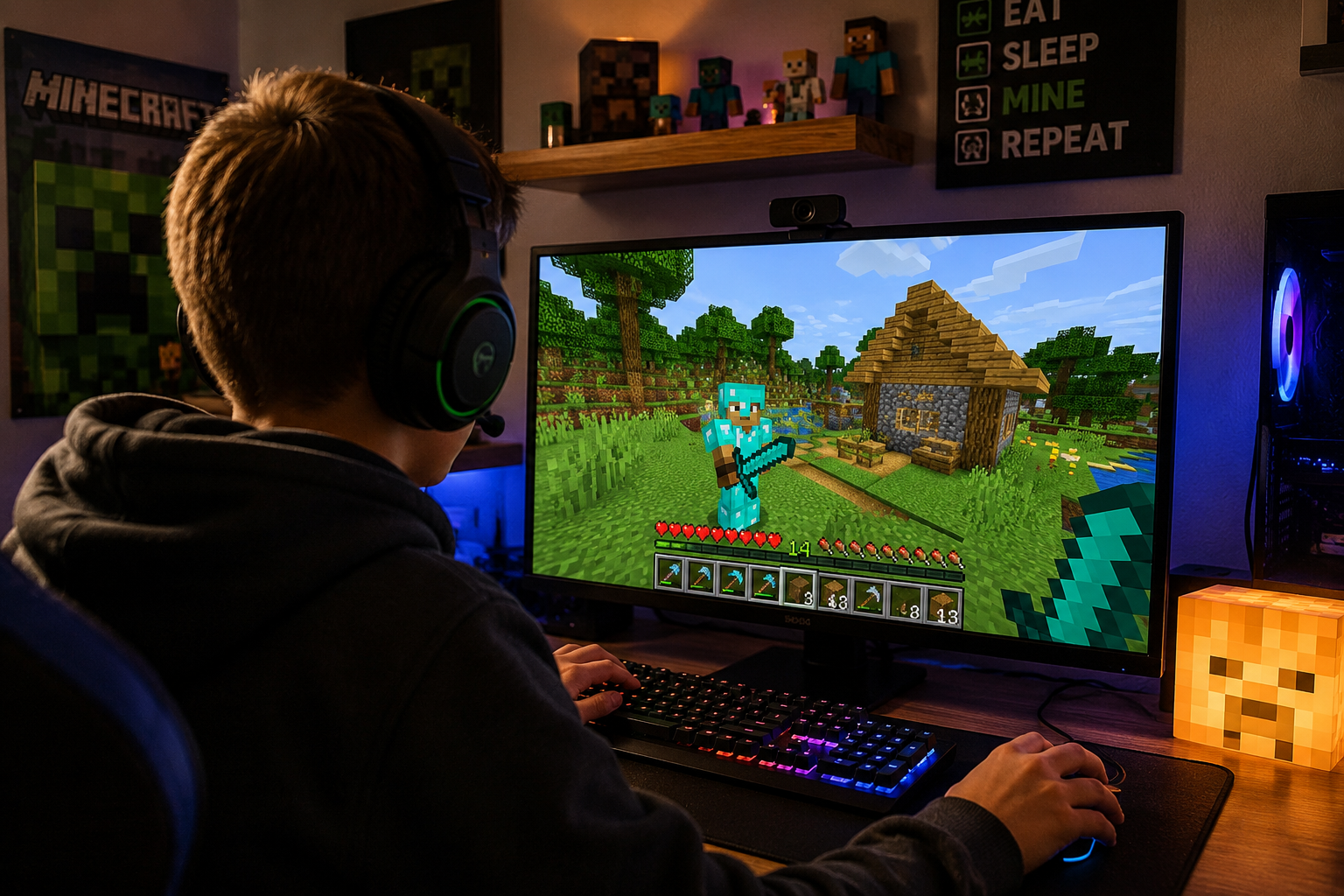
Minecraft Addiction Lawsuit Allegations
A growing number of people across the country are now bringing video game addiction lawsuits against game developers and platform companies. Many of these lawsuits involve individuals who became addicted to Minecraft. These lawsuits seek financial compensation for the harm caused by addiction to Minecraft.
The Minecraft addiction lawsuits are based on two primary legal theories: failure to warn and defective design.
Failure to Warn
Product manufacturers have a legal duty to warn consumers about known or knowable health risks associated with their products. The Minecraft lawsuits allege that Microsoft and Mojang knew or should have known that Minecraft could be addictive, especially for minors and neurodivergent children, but failed to provide adequate warnings to parents and users.
Failure to warn is one of the primary negligence claims in Minecraft addiction lawsuits and other video game addiction lawsuits. A warning would not solve every problem. But if a company knows a product can cause compulsive use and serious impairment in some children, parents should not be left to discover that risk after the damage is done.
Design Defect
Product manufacturers also have a legal obligation to ensure that their products are designed in a reasonably safe way for intended users. If a product contains a design defect that makes it harmful, the manufacturer can be held liable.
The Minecraft addiction lawsuits allege that Minecraft is defective because it was intentionally designed to be addictive or habit-forming. Plaintiffs argue that Microsoft and Mojang could have used safer design choices, such as stronger default parental controls, better play-time limits, clearer spending limits, stronger age verification, warnings for prolonged play, and fewer mechanics that encourage endless engagement.
Privacy and Data Allegations
Some gaming addiction lawsuits also include privacy or data allegations. Plaintiffs may argue that companies collected data from minors or used player behavior to improve engagement systems. These claims depend on the facts of the case and the platform involved.
Evidence That Helps a Minecraft Addiction Lawsuit
These cases are built on documentation. A parent’s story is powerful, but the strongest cases have records that support the timeline.
Evidence that may help includes Minecraft account records, Xbox or Microsoft account records, screen-time data, purchase history, Marketplace or Minecoins records, Realms subscription records, app store records, school records, therapy records, pediatric records, psychiatric records, medication history, messages about gaming, screenshots, and family notes documenting behavior changes.
Build the timeline now. When did the child start playing Minecraft? How much did they play? When did school problems begin? When did sleep change? When did anger, anxiety, or depression appear? When did you seek treatment? What happened when you tried to restrict access?
The defense will argue that other issues caused the child’s problems. A clear timeline helps answer that argument.
Potential Settlement Value of Minecraft Addiction Lawsuits
The Minecraft addiction lawsuits are still new, so estimating potential settlement payouts at this stage is necessarily uncertain. There is no global Minecraft settlement. There have not been enough trials to create reliable settlement values.
Still, we can give practical settlement estimates based on the severity of the injuries alleged and the way similar mental health and product liability claims are often valued.
The potential settlement value of individual Minecraft addiction lawsuits will vary significantly based on the circumstances of each case. The severity of the addiction, the resulting mental and physical injuries, medical treatment, school impact, age, spending history, and strength of the proof will drive value.
Who Is Eligible to File a Minecraft Addiction Lawsuit?
Our firm is currently accepting new Minecraft addiction lawsuits from anyone who meets the following eligibility criteria:
- Gamer must be 24 years old or younger
- Gamer played Minecraft for at least 2 hours per day for a minimum of 5 weeks, or 70 hours over 5 weeks
- Gamer has been medically diagnosed with conditions such as gamer’s rage, depression, anxiety, seizures, or orthopedic injuries
- Gamer received treatment for gaming addiction or disorders related to game addiction
If your child meets these criteria, start gathering records now. Save Minecraft account information, Xbox or Microsoft records, screen-time history, purchase records, school records, therapy records, medical records, and any notes showing the behavior change.
Minecraft Addiction Lawsuit FAQs
Contact Us About Minecraft Addiction Lawsuits
Our firm is accepting Minecraft addiction lawsuits nationwide. If your child suffered serious mental, physical, educational, social, or financial harm connected to Minecraft addiction, call us today for a free case evaluation.
Call 800-553-8082 or contact us online.
You do not need to prove the case before calling. The first step is building the timeline, identifying the accounts and platforms, collecting the records, and reviewing the medical and school history.